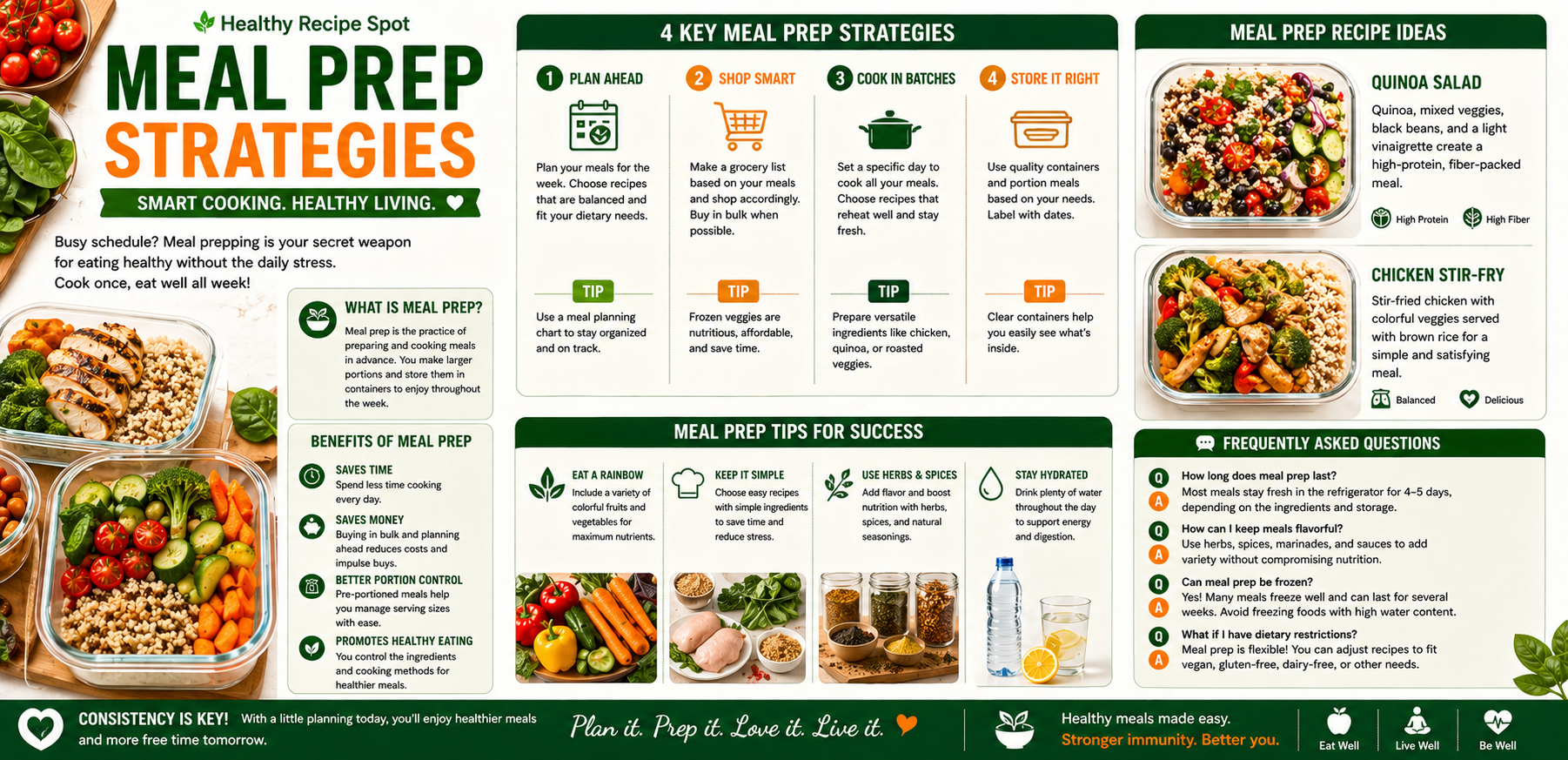
Maintaining a nutritious diet is essential for a healthy lifestyle, but busy routines can make it difficult to stay consistent. Meal prepping offers a practical solution by allowing you to prepare meals in advance, saving both time and effort. This guide explores effective meal prep strategies to help you build a routine that is both efficient and sustainable.
What Is Meal Prep?
Meal prep involves cooking and organizing meals ahead of time, often in larger quantities that can last several days or even a full week. While it may seem like a modern trend, this approach has long been used in many cultures as a way to simplify daily cooking and ensure consistent access to ready-made meals.
Benefits of Meal Prepping
- Saves time: Preparing meals in bulk reduces the need to cook every day
- Cost-effective: Buying ingredients in larger quantities can lower overall expenses and reduce impulse purchases
- Supports portion control: Pre-portioned meals help manage serving sizes
- Encourages healthier eating: Home-cooked meals give you full control over ingredients and cooking methods
Key Meal Prep Strategies
1. Plan Ahead
Start by deciding what meals you want to prepare for the week. Consider your dietary needs and aim for a balanced mix of protein, carbohydrates, and vegetables.
Tip: Use a weekly planner to organize your meals.
2. Smart Shopping
Make a detailed grocery list based on your meal plan. Buying in bulk can save money, but always keep shelf life in mind to avoid waste.
Tip: Frozen vegetables are a convenient and nutritious alternative to fresh produce.
3. Batch Cooking
Set aside a specific day to cook multiple meals at once. Focus on recipes that maintain their flavor and texture when reheated.
Tip: Staples like grilled chicken, rice, or quinoa can be used in a variety of dishes.
4. Proper Storage
Use suitable containers to store your meals and portion them according to your needs. Labeling containers with dates helps track freshness.
Tip: Clear containers make it easier to see what’s available at a glance.
Simple Meal Prep Ideas
- Quinoa Salad: Combine quinoa with vegetables, beans, and a light dressing for a nutrient-rich meal
- Chicken Stir-Fry: Cook chicken with mixed vegetables and serve with brown rice for a balanced option
Frequently Asked Questions
How long do prepped meals last?
Most meals stay fresh in the refrigerator for about 4–5 days, depending on the ingredients and storage.
How can I keep meals flavorful?
Use herbs, spices, marinades, and sauces to add variety without compromising nutrition.
Can meals be frozen?
Yes, freezing is a great way to extend shelf life. However, some foods, like fresh salads, may not hold up well after freezing.
Final Thoughts
Meal prepping makes healthy eating more convenient and less stressful. With proper planning and consistency, it can become a natural part of your routine, helping you save time while maintaining a balanced diet.